Showing posts with label Drive-ins. Show all posts

Tuesday, December 17, 2013

Tom Laughlin 1931-2013

I once showed the film BILLY JACK (1971) to my daughter, and she rolled her eyes most of the way through. I was so crestfallen that she didn't get it. Or rather, I saw that she easily got it, since it all seemed so obvious to her.

I realized: much of what we once fought for had become passe. These truths are now just a given.

And that's a good thing, isn't it? In one way, of course. But it also means the young people do not understand how it was for us. They do not understand that what they now take for granted, was risky and dangerous for us--something as simple as standing at a bus stop, wearing patched jeans and scruffy hair. Or whites and non-whites entering an ice cream shop together.

That's when I knew the magic Billy Jack moment had passed forever, and doesn't even really translate well to the next generation.

Thus, the passing of Tom Laughlin is even more sad than expected.

From the New York Times:
Mr. Laughlin wrote, directed and starred in all four of the Billy Jack films, earnest tales of a tightly wound, half-Cherokee Vietnam veteran named Billy Jack who protects Indians, wild horses and progressive ideals against attacks.
...
By most accounts, the single-minded, loner-idealist tough guy at the center of the Billy Jack franchise was based on an amalgam of cowboy archetypes, Asian martial-arts film archetypes and Mr. Laughlin’s image of himself. Colleagues and family members described him as driven, stubborn, uncompromising and intensely attracted to quixotic endeavors.

After a succession of small film and television roles during his first decade in Hollywood, he and his wife, Delores Taylor — who later co-starred in the Billy Jack films — opened a Montessori school to keep their children out of what they considered the mediocre public schools of Southern California.

A half-dozen years later Mr. Laughlin decided to return to the movie business, but on his own terms. He wrote his script and raised money for the motorcycle movie “Born Losers” (1967), the first to feature Billy Jack. He later became an outspoken environmentalist and antinuclear activist and sought the Democratic nomination for president on several state primary ballots in 1992, 2004 and 2008.
At age 13 or 14, I wanted to go out west and go to the Freedom School run by Billy Jack's almost-girlfriend (and real-life wife) Jean. When my mother told me the school was all make-believe, I cried over it.

No, no, NO... the school is REAL. Billy Jack is REAL.

Just like Santa.

~*~

My deepest condolences go out to Laughlin's partner, Delores Taylor, who embodied the lovely, strong-willed Jean. The first lead actress in a Western movie who didn't seem to have on any makeup and didn't seem to care. Film critic Pauline Kael said Taylor's performance marked the first time she had ever seen a woman discuss her own rape in a movie, and what it meant to her life. "The film pauses for these moments, which were perhaps improvised by Delores Taylor," she wrote, amazed. Yes, and so did we. In the 70s-theater I was in, you could have heard a pin drop, as Delores Taylor relates the incident. Not a single woman was breathing, we hung on her every word. My mother said it was the greatest thing in the movie. (Later that day, she would finally tell me of her own experience.)

And see? We can turn on Law and Order SVU at any time of the day or night and see this scene over and over (with not nearly the gravitas) ... but once upon a time, it was odd enough that a New Yorker critic saw fit to mention it as almost-miraculous.

~*~

In Billy Jack, during a scene at the Freedom School, some kids are re-enacting the life of Jesus Christ. A black kid plays Jesus (which apparently is still pretty radical stuff!--but I digress).

One of the kids asks him, when you return, how do we know its you? Give us a sign! And he gives the black power salute, his fist in the air.

The kids, of all races, stand and silently return the salute.

And so, at about 2:04 in the video below, you see the significance as Billy Jack is taken away by the law. The kids, once again, give 'the sign'--the black power salute. And right in the shadow of a cross. (Sobbing at 2:39, in the purple shirt, is Laughlin's daughter, Teresa.) Whatever you think of Tom Laughlin's Jesus-complex, this was some bang-up B-movie film-making, folks.

Billy Jack finally controls his violent temper, for the greater good of the whole group. He sacrifices his own freedom to keep the Freedom School open. As one who often fights to control my own temper, do I have to tell you?

It always makes me cry.

~*~

Rest in Peace, Tom Laughlin. I would love to have known you.

One Tin Soldier - Coven (theme of Billy Jack)

Wednesday, February 22, 2012

Old movie trailers

... from movies you've never seen. Unfortunately, I didn't find certain ones I was looking for. However, finding some of these was worth the whole expedition, and you are in for a real treat.

And I regret to say the various uploaded trailers for "It's Alive" (1975 version) are not nearly as funny as I remember.

~*~

A forgotten movie of the 70s, almost qualifies as cinéma vérité. The two leads seem not to be "acting" at all.

I suppose it also matters that these are my favorite actors. :)

Scarecrow (1973)


~*~

This is an old-school trailer for one of the best B-movies of all time.

The movie had a famous fake-out ending, which catapulted director Jonathan Demme to the top. (He later went on to fame and fortune as director of "Silence of the Lambs.") And B-movie queen Barbara Steele takes center stage, which makes us wonder how this proper British lady ended up as warden of a nasty American women's prison.

The right woman for the job!

Caged Heat (1974) (caution: nudity, NSFW, sexism, violence, etc)


~*~

Brian DePalma's horror movie about conjoined twins, which simply defies rational description. Margot Kidder was stunningly beautiful!

Sisters (1973)


~*~

Rosemary's Baby and The Exorcist go to the drive-in, starring Juliet Mills, who played Nanny in "Nanny and the Professor." (really) This trailer was shown for weeks on late-night TV, and was very popular with 70s potheads.

Beyond the Door (1974)


~*~

In this movie, a nice middle-class white couple go broke and decide to go into robbery to make ends meet. (Why don't they make heartwarming family tales like this any more?)

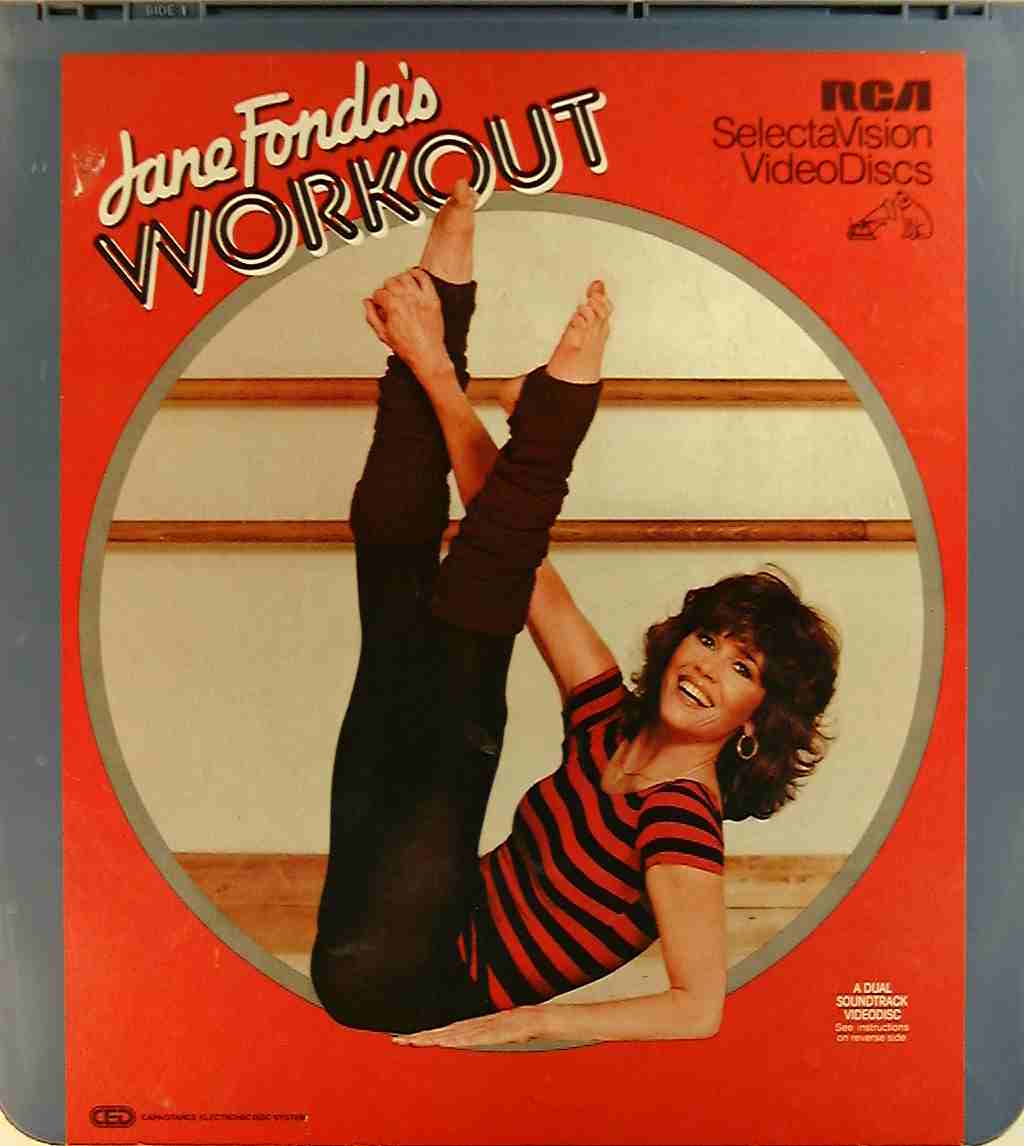
Jane was heavily into her JANE FONDA'S WORKOUT phase, and she looks mah-velous!

Fun With Dick and Jane (1977)


~*~

I guess you didn't know that the infamous Gates of Hell have to be guarded? And how exactly would one audition for THAT job?

Well, it probably won't surprise you to learn that you get DRAFTED for the position, and you have no say in it at all. (screams)

The Sentinel (1977)


~*~

Before Terry O'Quinn got mega-famous on LOST, he was a very believable serial killer.

The Stepfather (1987)


~*~

O'Quinn reprised his bang-up role in the rather cheesy and predictable Stepfather 2. This movie came out the same year John List was arrested. It is widely assumed the first movie was inspired by John List, but in fact, List was still at large in 1987. By 1989, the "List story" had entered the national consciousness and you can clearly see the influence of List on the narrative.

Stepfather 2 (1989)

Thursday, February 9, 2012

Bring Joe-Bob back to the Drive-In, and other horrifying updates

Joe-Bob Goes to The Drive-In was the name of Joe Bob Briggs' old B-movie column in the Dallas Morning Herald. These reviews were compiled into a very entertaining book by the same name. The book's sequel was titled, of course, Joe-Bob goes back to the drive-in (introduction by Wayne Newton). Both books are totally indispensable and absolutely necessary for any serious trash-culture fan!

Joe-Bob Briggs was really John Bloom, and with his TEXAS MONTHLY writing partner, Jim Atkinson, wrote a very good true-crime account of one woman killing another with an axe. I sure never forgot THAT one! (Aside: An Amazon reader informs us that this woman, Candy Montgomery, is now a nurse in Atlanta... remind me never to go to the hospital in Georgia, for any reason.) He hosted his own TV show for awhile: Joe-Bob's Drive-In Theater. This was one of the great treasures of the 90s, my friends. You may also recall Joe-Bob as the host of the more mainstream 90s cable-show MonsterVision, which brought us some far-out B-movie classics, such as the inimitable Basket Case.

Joe-Bob has been in a few movies himself, and was even in the mini-series of THE STAND, playing a character named Deputy Joe-Bob Brentwood (attesting to Stephen King's excellent B-movie sensibilities). He was also in Martin Scorcese's Casino, one of my favorite movies, where you may remember him getting fired by Robert DeNiro and hollering in protest, "This is not the way to treat people!" (I remember thinking, is that Joe-Bob Briggs he is firing????) Unfortunately, his scenes were deleted from Texas Chainsaw Massacre II, which I am sure upset him terribly.

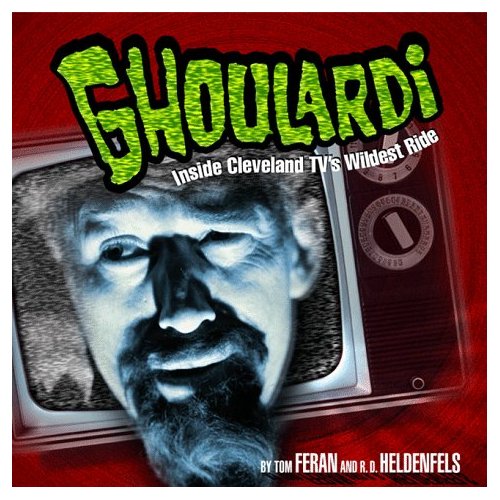
My question: WHERE is the contemporary Joe-Bob? Why are we Joe-Bobless? It doesn't seem fair that we have no trash-movie impresario on regular TV these days. (Note: I'm sure one of the millions of satellite channels has this kind of programming, but I refer to mass-market TV.) I grew up with horror movies hosted by the incomparable Ghoulardi of Cleveland, and I love that kinda stuff.

Come back, Joe-Bob!!! And no offense, but you can leave your politics back in Texas. Nonetheless, if I have to put up with Libertarian jabber to get some decent B-movies, I am willing to do that.

~*~

Some more stuff:

:: Conspiracy theories! As an ex-Yippie, I eat em for breakfast. (I also figured this would go well with Joe-Bob.) Bin Laden Death Deemed Murder of CIA Case Officer as 9/11 Coverup:

President George W. Bush knew Osama bin Laden was a CIA agent and in no way ever involved in 9/11. He knew bin Laden personally from family visits and knew bin Laden had been to the White House while living in the US under the cover name of “Tim Osmon.”

This has been verified by CIA officials.
It has? Well, color me surprised.

I definitely need to hear more about this one.

:: Monica runs a video from Ellen DeGeneres, calling out the "One Million Moms" (actually only 40,000) who have targeted her as a gay spokesperson for JC Penneys. (I also thought homophobes go well with horror movies, so that is the reason the link goes here.)

:: And finally, from Politico: The political transformation of Barack Obama, which has most assuredly been horrifying.

Add your own, play along at home.

Friday, September 9, 2011

Nothing can change the shape of things to come

A classic DEAD AIR rerun from 2007, because I really wanted to hear the song: bringing you classic NOSTALGIA with Max Frost and the Troopers, a fictional band made up for the movie WILD IN THE STREETS.

Wild in the Streets (1968) was a super-fabulous B-movie about adult paranoia circa 1968, as the kids lower the voting age to 14, feed LSD to everyone over 30, and take over the country. Christopher Jones, beautiful ex-husband of Susan Strasberg, brazenly channels Jim Morrison, and gives us this fantastic Doors-as-garage-band song (by brilliant songwriting duo Barry Mann and Cynthia Weil), which ominously reminds us that Nothing Can Change the Shape of Things to Come. Ain't it the truth.

The kids elect Max president in the movie, which doesn't bode well, as you might imagine.

And if your kids try to get you to drink anything suspect, REFUSE IT!

~*~

Max Frost And The Troopers - Nothing Can Change the Shape of Things to Come

Friday, March 11, 2011

Friday nights in northern Ohio...

Children all over northern Ohio used to stay up late on Friday nights to watch Ghoulardi, who hosted horror movies and other fun stuff. We loved him! Apparently there is now a whole book out about him and his Cleveland-based show (see link), which I must read.

He did a memorable spoof on the immensely-popular 60s nighttime soap opera "Peyton Place", which he called Parma Place. It began with polka music, unlike the respectable New Englandish music that signaled the beginning of "Peyton Place"... In addition, the "drama" consisted of finding new places to put plastic pink flamingos in the yard, as Ghoulardi frequently complained to his long-suffering wife (curlers forever in her hair) that he couldn't find his Cheez Whiz. It was so OHIO... I don't think the jokes translate well to these modern times, but we loved it to death.

I loved all the wonderfully-shlocky horror movies I saw during that time, and have included some old trailers below.


~*~

Children of the Damned (1964)


~*~

Check out the question mark on the wall behind William Castle's head. Not sure of the significance.

13 Ghosts (1960)


~*~

Caution: major sexism, as a woman's brain/head survives and her scientist boyfriend scouts out other sexy bodies to sew onto her head. (Really, and we GREW UP on this stuff!)

The Brain That Wouldn't Die (1960)


~*~

Tuesday, April 8, 2008

Charlton Heston 1923-2008

Left: This is the exact movie poster we have on the wall of our spare room, which inspired me to write this.

~*~

There is this indescribable expression on Charlton Heston's face, somewhere in the screamingly bad film NUMBER ONE ("You have nowhere to go but down!"). Ex-wide receiver Bruce Dern is talking to aging quarterback Heston about what it's like in the used car business, or whatever business he transitioned to after his football career was over.

"But what do you do?" asked Heston.

Bruce looks stunned that Heston doesn't get it: "I smile at all the people!" he says, in that trademark oily-nasty way he has.

Heston looks... disgusted, indignant.

I realized, as a teenager, that was a real expression I had seen. I thought, "He is disgusted. He doesn't want to sell cars, either."

And Chuck Heston never sold cars. He worked with the likes of Orson Welles, he was Moses and Ben-Hur, he wrote books, he campaigned for Ronald Reagan, he was president of the NRA. But he never sold cars. Whenever I read or heard of his many exploits, I always came back to the disgusted expression on his face in NUMBER ONE; his open contempt for the ordinary life. He would be a star, or nothing.

Cleaning up the spare room yesterday, I saw the old PLANET OF THE APES movie poster we've had hanging on the wall since forever. I realized I needed to blog about Charlton Heston, if only to bid my fond and affectionate farewell to one who has given me so many hours of entertainment and memories. After all, my first trip to the drive-in that I can remember, was to see Heston and Anne Baxter chew the scenery together in Cecil B. DeMille's The Ten Commandments. I was maybe four years old? It was the 4th of July, and there were fireworks. God and Country; Chuck certainly would have approved.

Rena at Peace Arena, reminds of us Heston's Civil Rights record, and recounts his march against segregation in Oklahoma in 1961, when few actors had any interest in anti-racist politics.

Resquiat in Pace.

~*~

Charlton Heston reminded us, most importantly, that Soylent Green is people!!!!!!

Sunday, November 25, 2007

Nothing can change the shape of things to come

Dead Air Church brings you classic NOSTALGIA with Max Frost and the Troopers, a fictional band made up for the movie WILD IN THE STREETS!

Wild in the Streets (1968) was a super-fabulous B-movie about adult paranoia circa 1968, as the kids lower the voting age to 14, feed LSD to everyone over 30, and take over the country. Christopher Jones, beautiful ex-husband of Susan Strasberg, brazenly channels Jim Morrison, and gives us this fantastic Doors-as-garage-band song (by brilliant songwriting duo Barry Mann and Cynthia Weil), which ominously reminds us that Nothing Can Change the Shape of Things to Come. Ain't it the truth.

The kids elect Max president in the movie, which doesn't bode well, as you might imagine.

And if your kids try to get you to drink anything suspect, REFUSE IT!

~*~

Max Frost And The Troopers - Nothing Can Change the Shape of Things to Come

Friday, October 26, 2007

Positively no refunds: Carnival of Souls

I have to blog about the Turner Classic Movies Underground Film Series earlier and earlier every Friday, since yall keep saying you MISSED IT. Okay, it's Friday morning, so no excuses!

Tonight, we get Herk Harvey's infamous B-movie, CARNIVAL OF SOULS (1962), which has an ending that unfortunately, has been cannibalized countless times since, and you'll therefore have no trouble guessing it. But it's nonetheless a haunting, moody, frightening, consistently startling film; like being in a black-and-white nightmare, or being held underwater. Richard Harland Smith writes:


Though fondly remembered by many horror fans, Herk Harvey’s Carnival of Souls (1962) was close to being a lost film for thirty years. Seminal studies of the horror genre from the late 60s through to the late 80s lacked reference to the film, their indices skipping from The Car (1977) to Carrie (1976) without so much as a by-your-leave. Thanks in great part to the efforts of Texas-based film historian and restorer Gordon K. Smith, Carnival was reborn in 1989 amid renewed interest and appreciation, not all of it backhanded. A subsequent re-release on the midnight show circuit allowed cult film fans to appreciate Carnival’s singular charms on the big screen. In 1990, the feature debuted on video cassette, a milestone heralded on the cover of the first issue of Video Watchdog magazine. The next year, Herk Harvey licensed Michael H. Price and Todd Camp to adapt his “weird show” as a graphic novel, illustrated in the monochrome starkness of a Jack Chick comic. (The less said about the 1998 remake rubber stamped by executive producer Wes Craven the better.) In 2000, Carnival of Souls was included in the prestigious Criterion Collection, keeping company with the expressive masterworks of Alfred Hitchcock, Ingmar Bergman, Carl Dreyer, Jean Cocteau, Georges Franju and Henrí-Georges Clouzot.
As well it should. It burrows deep into your head and stays there. Perhaps it is because, like the best horror, it plays on those fears we all share; those fears we don't readily admit to others. Danel Griffin writes:
I think what I like best about Carnival of Souls is the way that it plays on our natural, everyday fears of isolation and the unknown. When I lived in the lower forty-eight, I used to drive alone in unbending streets in the darkness of the night, and it was easy to give into the sensation that I was not alone out there. You have also found, I am sure, that in the quiet solitude of night driving, it is easy for your imagination to get away with you: Is that a reflection in the passenger-side mirror—some demon or lonely ghost staring at you from the outside? Or when you are alone in the room of an old, dark house of some distant relative: As you smell the ancient dust in the guest bedroom, you think you see a face staring at you through the old, faded curtains. Our wits, of course, eventually get the better of our fears, and we tell ourselves that there is no one in the passenger side window or through the curtains. What is truly terrifying about Carnival of Souls, of course, is that there really is a white, evil face staring back at us. It smiles at us devilishly, with a look that notifies us that it wants no less than our souls.

Cue The Twilight Zone theme.
And for Godsake, watch out for that deranged, spooky-weird organ-music!!

~*~

Trailer:


----------------
Listening to: The Black Crowes - Remedy
via FoxyTunes

Friday, October 19, 2007

Too much to dream: the Monkees' HEAD

One of the more bizarre artifacts from the 60s is on display tonight on Turner Classic Movies Underground film series: The Monkees' very weird, trippy HEAD (1968), which must be seen to be believed.

The Monkees were, as you probably know, prefabricated teenybopper idols manufactured in Hollywood. They were also (yes, I admit it!) beloved by your humble narrator, whilst still a scruffy, rust-belt ragamuffin, subsisting mostly on TV-dinners and Velveeta cheese. The Monkees mass-marketed bubblegum cards fit right in with the Velveeta. One memory I have of the fourth grade: my tiny bedroom mirror lined with Mike, Peter, Davy and Micky, smelling faintly of bubblegum.

American culture shifted very suddenly during that era. The prefab Monkees took LSD and became conscious beings. Subsequently, they decided to make a movie with Jack Nicholson about what it's like to be conscious beings, while also experiencing major intergalactic teenybopper mega-fame at the same time. You have to admit, that's something else!

In HEAD, you get all manner of bizarre acidhead-slapstick repartee, later perfected by the Firesign-Theatre, and other 70s comedy troupes. There are several blatantly Beatlesesque musical knock-offs, one memorably accompanied by a psychedelic underwater swimming sequence. From Jeff Stafford at TCM:

Initially called Untitled, HEAD was an unconventional project from the beginning. According to author Patrick McGilligan in Jack's Life: A Biography of Jack Nicholson, "Bob [Rafelson, director], Bert [Schneider, executive producer], and Jack, with the four Monkees in tow, went to Ojai [California] for several days. They smoked "a ton of dope" (as Davy Jones recalls) and tossed ideas into a running tape recorder...The script was set up to have the least continuity imaginable, and only the slenderest plot trigger - the four Monkees leaping off the Golden Gate Bridge in an effort to escape the mental prison of a black box, which was "Head," meaning pothead, but also meaning all the rules and straitlaced conventions inside one's head that inhibit enjoyment of life. With their tapes and notes, Nicholson and Rafelson went away to the desert for inspiration. According to at least one account, they scribbled a treatment while tripping on acid."

By the time filming began on Head, The Monkees were less than happy with their circumstances. Not only were they feuding with Columbia over their contracts and salaries but they felt betrayed by Rafelson and Nicholson after they were informed that none of them would receive a writing credit on the film. "We were disappointed and angry," Micky Dolenz said. "Mike was furious. He took all the tapes and locked them in the trunk of his car!" As a result, Micky, Davy and Mike (without Peter's involvement) refused to show up on the first day of shooting which infuriated Rafelson and Nicholson. After a day of negotiations, filming resumed with all four band members but relations between the Monkees and their director were decidedly strained after that...and Mike, Davy, Micky and Peter never received a writer's credit for their contributions.

When Head was completed, Rafelson and Nicholson launched a guerilla advertising campaign in New York City, plastering stickers for the film everywhere on taxicabs, signs, police helmets, you name it. At one point they were even arrested for being public nuisances but their efforts were in vain. The critics were unimpressed and the film held little appeal for anyone who wasn't a fan of the Monkees' TV show. Dolenz stated later, "Because the film was rated R, most of our fans couldn't even get into the theatre to see it in the first place and those who did just didn't have any idea of what we were up to." Nicholson, however, maintains even today that Head is one of his proudest accomplishments and still calls it "the best rock-'n-roll movie ever made." Despite its commercial failure, Rafelson was equally pleased with it, comparing it often to Fellini's 8 1/2 (1963).
In HEAD, the Monkees finally play their own instruments, attack a coke machine in the desert, play dandruff in Victor Mature's hair, and jump off the Golden Gate bridge. In general, they finally get to do whatever they want.

They rebelled mightily against their own Velveeta-hood.

In the process, they became Real, and as you good children know, once you are Real you can't become unreal.

~*~

Trailer:


----------------
Listening to: The Electric Prunes - I Had Too Much to Dream (Last Night)
via FoxyTunes

Saturday, October 13, 2007

Pay the cost to be the boss

Sitting here in a relaxed state, watching Turner Classic Movies' excellent Underground movie series (which I look forward to every Friday!) and tonight, we get Black Caesar, one of the more infamous Blaxploitation movies of the 70s. (Coincidentally, the remake of SHAFT, starring Samuel L. Jackson, just ended on another channel.)


Fred Williamson is so beautiful, it's impossible to believe he wasn't a multimedia star of galactic proportions... but then, this was the 70s.

David Kalat (on the TCM website) writes, about Black Caesar:
Despite Fred Williamson’s riveting star turn and the memorable James Brown soundtrack, Black Caesar is generally stronger in its ideas than its style. Put another way: [Larry] Cohen’s a better writer than a director (at least at this early stage in his career).

For all that Tommy Gibbs does to build his empire, spend lavishly, and dispense extravagant gifts and violent payback in equal measure, none of these measures ever hide the hurt. Sure, he gets his revenge on McKinney, the corrupt and racist cop who maimed him, but the problem is Gibbs’ wounds are deeper and more intractable than his limp. Getting even with Whitey is fairly straightforward but ultimately unsatisfying, because what he really needs is to reconcile with his parents. Coming to terms with his painful childhood is a prize that eludes him to the last.
During a particularly nasty rape scene, Black Caesar/Tommy Gibbs does not seem to be enjoying it. This made an impression on me; I remember thinking, "Why is he doing that? He isn't having fun." And so, a Blaxploitation movie was one of the first places I ever saw rape portrayed as a simple act of aggression, rather than uncontrollable male lust.
As the film builds to its brutal climax, Cohen has gradually yet masterfully turned Gibbs’ story into an epic myth about American race relations. Gibbs and McKinney square off over a tin of shoe polish—a small prop, but by now imbued with enough symbolism to represent not just Gibb’s hardscrabble youth but centuries of white-black inequality. Now, this is a movie that features a severed ear in a plate of spaghetti, an exploding turkey, a rape scene, and a phony priest who launders dirty money through his collection box. For a film jam-packed with two scoops of outrageous ideas, this one little can of shoe polish becomes the most powerful and evocative of them all.
Any favorite movies of this genre? Do you think they were (on the whole) a negative or positive cultural phenomenon? I always liked the movies (they were very popular where I grew up, with whites at the drive-in, too) but I later learned they were tacky and low-rent, and was ashamed to admit to my fondness for them. After Quentin Tarantino's blatant thievery (homages!--he would say) and Pam Grier's comeback, they seemed to be getting another look.

Bright Lights Film Journal: Blaxploitation
Sticking it to the man: Heroes of Blaxploitation
Black Cinema: Blaxploitation

Excerpt from the great funk score, by James Brown:

The Boss - James Brown

[via FoxyTunes / Black Caesar]

Saturday, September 22, 2007

Soft-core memories of the Drive-In

Left: THE STEWARDESSES which of course you know is the highest-grossing 3-D movie of all time!


In my post yesterday, I mentioned soft-core porn. In reading it back, I wondered if such a thing even exists now? What was called soft-core in my youth, could now be broadcast on regular network TV with no trouble and no censorship. And certainly, a movie like Midnight Cowboy, (which, believe it or not, was rated X when it first came out), barely qualifies for an R these days.

But what I loved... ah!... were the soft-core movies at the Drive-In! These movies had occupational names like The Stewardesses and Private Duty Nurses. (This was one reason early punk bands sometimes chose names like The Waitresses.) The women in these movies were often in semi-formal competitions with each other, to see who could bed the most guys, and alas, one would always fall in love and have to quit the competition. It was sweet!

The dialogue was weird, as it was usually written by men. Thus, it was the kind of sexual talk men assume women do outside of their presence. (Check out the fabulous song GIRLS TALK by Elvis Costello; at least Elvis knew he didn't have a clue, which just made him more nervous.) These B-movie girls sounded like guys in a locker room, not surprisingly. What's interesting is that they always seemed to be enjoying the dirty dialogue and performed their sex scenes with aplomb. In one of these (and I regret to say I cannot remember the title, as they all tend to run together in my mind), one woman reached over and turned a lamp on during sex, and smiled the dirtiest smile I've ever seen, before or since. Like the guy in Citizen Kane who remembered the girl with the parasol once a month for the rest of his life... I have always remembered that wicked B-movie smile.

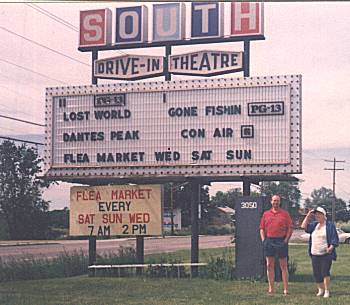
I saw these movies at that transcendent and resplendent place called THE DRIVE IN... I miss drive-ins so much, at times, I fear I will scream when I see photos of them, and particularly (((shrieks!)) if I see a photo of one I actually went to, like this one.

The Drive-Ins showed old movies, second run, B-movies, foreign, whatever. The screens were so enormous, you could see them a mile away. Outside one restaurant parking lot (with an excellent view of a drive-in screen), several of us as teenagers would collect randomly to watch the movies with no sound--and it was in this manner I saw several bad movies (LINDA LOVELACE FOR PRESIDENT), as well as movies that required no sound to enjoy (A FISTFUL OF DOLLARS).

Working-class couples used to take their kids to the drive-in; as children, we'd all be asleep by the time the dirty movies (second feature, usually) came on. Taking the kids in a car meant no babysitting costs; it was a cheap way to have a good time. As kids, we would go in our pajamas and run around like crazy before the movie started, then at nightfall we would be suitably exhausted and fall asleep right after the cartoons, even before the opening credits. The adults might take some beer and some eats, maybe invite the cousins or neighbors--I can recall a "line" of cars that was my stepfather's family--two of his brothers, their wives and children. Lots of people would "meet" other cars at the drive-in and then move from car-to-car--as you might recall from the movie Grease.

If your mother had forbidden you to see a certain boy, you dated his friend, and when you all showed up at the drive-in, you could change places. :) Likewise, pot-smokers, gay folks, and people having extramarital affairs, all found fun stuff to do at the drive-in, and everyone was very discreet.

At the drive-in, leaving your car at night (to go to the bathroom, buy some sodapop or whatever), and moving amongst the microphone-stands, was a thoroughly magical and hallucinatory experience. The microphones, hundreds of them inside cars or outside on their stands, broadcast the movie in unison. This created an amazing, haunting stereophonic echo: drive-in polyphony, as beautiful in our memories as a medieval choir.

I can still remember going to get some 7-Up and hearing the most fantastic noise of my life, and I turned transfixed to see a 50-foot-high, white-fringed Roger Daltrey on the screen in front of me, which was as incredible as if Jesus Christ had come back to earth. Holy shit!--I thought. I stood there in the dark, hypnotized by the huge screen (beautifully surrounded by trees and crisp Midwestern summer night), as those hundreds of microphones brought to me the sound of the greatest rock band in the history of the world. (No, that is not open to debate. Not for nothing is my email "Who fan"!) And I can remember the sound of the film WOODSTOCK at the drive-in, as The Who, Paul Butterfield, Alvin Lee, and so many others radiated rhythm from all of those little microphones...

My wish for everyone is that they should have such a wonderful memory.