Friday, December 12, 2014
Got music?
But I have been storing up songs, so you're in luck.
~*~
First, a song about Daisy's childhood. Yes, this is about MY MOTHER, and all those other mouthy beehive-hairdo white trash ladies of the 60s ... I miss yall so much. (And especially during the holidays, I always miss my mama terribly.)
In my lifetime, I have gone from embarrassment over this song (amazingly accurate, thought the 12-year-old me, how did Tom T. Hall KNOW THIS ABOUT US??????), to giggling-glee and pride, to tearful nostalgia. Its from another time. This could never happen now.
But hey, really: it used to happen. My mother was a bit more colorful in her language than ole Tom's lyrics could be in 1968.
I included a version with the lyrics:
Jeannie C. Riley - Harper Valley PTA
~*~
Speaking of nostalgia, any comments I attempt on this one, would probably degenerate into blubbering... so I won't.
Cassidy - Grateful Dead
~*~
A sentiment I have often had, about people I love... it was such a surprise to hear the same feelings come from a man.
Delightful, sweet and very honest.
I wish I was your mother - Mott the Hoople
~*~
For you headbanging kidz, I remembered to bring the punk.
This song comes highly recommended; it once destroyed one of my friend's car speakers.
New Rose - The Damned
~*~
Next up, a song about my husband's hometown:
Little Feat - Oh Atlanta
~*~
Big finish!
Despite copious promises, I never have updated my old INSTRUMENTALS post, which continues to get hits from desperate music-lovers looking for the names of ancient, wordless tunes ... and so, as a consolation prize, here is a stunning instrumental tune you have probably heard many, many times, done with consummate class and finesse by Jeff Beck.
My very favorite version of the jazz classic first written and recorded by Charles Mingus in 1959.
Goodbye Pork Pie Hat - Jeff Beck
Posted by
Daisy Deadhead
at
2:07 PM
Labels: Atlanta, Charles Mingus, childhood, classic country, classic rock, Grateful Dead, instrumentals, jazz, Jeannie C. Riley, Jeff Beck, Little Feat, Mott the Hoople, music, punk, The Damned, Tom T. Hall
Wednesday, December 4, 2013
When Irish Eyes are Smiling
Mr Daisy was watching "Arrow" DVDs, and the actress playing Laurel seemed so familiar to me. It was driving me crazy. I KNEW I'd seen her.
Her eyes. Very distinctive. I knew I had seen them before.
I can usually spot actors in various roles, even if they are wildly different. It's something I enjoy doing--trying to remember where I've seen them; which movie or TV show they were in previously. I especially enjoy solving the puzzle if many years have passed and they look recognizably older. (i.e. Did you realize that's 17-year-old Laurence Fishburne, primarily known to the younger generation as Morpheus, playing 'Clean' in Apocalypse Now?)
But I couldn't remember seeing this person AT ALL. I was confused. Why do her eyes look so familiar?
And so, finally hollering uncle and officially giving up, I went to the indispensable Internet Movie Database, that great settler of marital disputes.
She is David Cassidy's DAUGHTER. Ahh, so that's it! She assuredly has his eyes; Irish Eyes are Smiling.
Mr Daisy offered the observation that I had stared at David Cassidy's eyes on my bedroom wall for YEARS as a teenager, along with The Monkees, The Who, David Bowie, Iggy Pop, Lou Reed, Michael Jackson, and so many others.
And he's right. David Cassidy's eyes were lodged in my memory. They must have made quite an impression, to make his daughter appear so familiar to me.
~*~
When I visited my father in Indiana as a kid (usually a traumatic experience), I would try to stay away from his house as long as possible by hanging out with my cousins. I liked them a lot, and they thought I was cool for being from a "big city"... yes, you are now wondering why anyone would think Columbus, Ohio, is a "big city"--but in comparison to my father's hometown, it certainly was.
While we would be eating ice cream in front of what was then called the local Five and Dime, somebody would walk by, stop dead in their tracks and then do a double-take and ask me if I was _____'s daughter. In small towns, everyone knows everyone else.
It was galling, intrusive, but strangely validating. I hardly knew my father; years would go by when I didn't see him. Then he would inexplicably get a sudden attack of parental responsibility and drive across state lines to collect me for the summer. In Indiana, everyone would oooh and ahhh at our striking resemblance, which even extended to how we laughed, how we gestured, and our general 'theatrical' nature. It kinda blew my mind, since I had always believed you had to be raised by someone to "be like" them (not just LOOK like them) and it seemed that somehow, that had turned out NOT to be true at all. My mother raised me, not my father, and yet somehow, I was so much like him.
And so it is with young Katie. I knew I'd seen her before, knew she reminded me of someone I had watched before, very closely. It isn't just her eyes, of course. She is similarly LIKE him, as I was "like" my father. "Resemblances" are such an odd phenomenon; it isn't only a physical thing.
The cars stop, the people turn around on the sidewalk and ask Who's Your Daddy?
Posted by
Daisy Deadhead
at
9:15 PM
Labels: Arrow, celebrities, childhood, David Cassidy, genetics, IMDB, Indiana, Katie Cassidy, Laurence Fishburne, movies, parenthood, teenage idols, TV
Saturday, November 23, 2013
Reflections on Jack Ruby
Depending upon who you read, Jack Ruby was a petty strip-club gangster or an important mobster-friend of Sam Giancana.
NOTE: I first wrote this in 2009 and have re-posted it every November since then. Since this is the 50th anniversary of the assassination, it seems even more pertinent and poignant.
Please limit comments to current post. Thanks.
~*~
It was November 24, 1963.
I remember that I was sitting on a footstool, my nose approximately 8 inches from my family's black-and-white TV set. If I got too close, I couldn't see anything, but I was intent on getting just as close as I could. I wanted to see it all.
It was Sunday morning, and I remember well the hubbub of the adults in the kitchen. I was the only one in the small dining room that served as our TV room. I heard the TV-news announcer say that Lee Oswald was going to be transferred in an armored vehicle. I didn't know what an armored vehicle was, but it sounded awesome. And yet... that little guy? As a six-year-old, I was surprised that such a skinny little guy could be the villain of the hour. I had expected the president's assassin to look something like Brutus, the dastardly evil man of the Popeye cartoons... or at least, he should bear some resemblance to Lex Luthor. This skinny, slight, soft-spoken fellow who calmly denied being near Dealey Plaza? Well, he was just spooky, that's all. They kept calling him a Marxist and a communist, words I didn't yet understand but knew meant that he was a bad person. (I would say the word "communist" in 1963 had the similar gravitas of the word "terrorist" in 2009.) I was enthralled by the constant TV-coverage, the switching back and forth from Dallas to Washington... to our new president, Lyndon Johnson and then back to the basement of Dallas city jail. It was as dazzling as space travel.
Middle-American culture had changed utterly and completely in only two days.
For one thing, the TV had not always been on before. You turned on the TV to watch something, and when it was over, you turned it off. Sometimes you left it on, but usually not. Among the working classes, it was not unusual for some families not to own a TV at all. There were often anti-TV holdouts in these families; cantankerous, old-school types who thought TV was all rubbish and probably unchristian. But after this weekend? This archaic viewpoint was consigned to the dustbin of history. Back in my first-grade class, I would hear about parents who had rushed out to buy a TV at long last. They simply could not bear to be left out.
The TV had been turned on, and stayed on. It was on when I got home from school, dismissed early due to the tragedy, and it was on throughout the funeral. And it stayed on forever after.
And the TV was on as they transferred Lee Oswald to the armored vehicle, or attempted to. There was much talk about security because tensions were running extremely high; there was palpable fury throughout the city of Dallas. When police had forcibly taken Oswald from the theater where they had discovered him, hostile mobs surrounded the police car, and it was said he might have been torn to pieces if the crowd had been able to get their hands on him.
Listening to all this, I was riveted. I remember peering intently as they brought him out, my nose almost right on the screen: There he is!
And then, the inevitable disappointment: such a nonthreatening little dude he was.
I peered and peered and then... bang. Oswald was down.
What?
It was so quick. If not for the firecracker-noise of the gun, I would never have known.
"They shot him!" I shouted, "They shot Oswald! They shot him!"
The adults stampeded as one entity, from the kitchen to the small dining room where I was. My mother, grandparents, some other relatives I have since forgotten... possibly my cousin Charlene.
"I SAW it!" I was shouting, "I SAW IT!"
SSSSSSSssssssshhhhhhhh! Everyone was shushing me. Had I really seen that? The adults' eyes were collectively popping. I felt pretty important for being the one to see it.
"He must be really mad about the president, huh?" I asked.
Nobody answered. They kept shushing me, as obviously-shaken news-announcers talked about what they had just witnessed.
And then, the adults were all looking at each other, that way adults did when they were thinking things that they would not share with children.
Finally, my grandfather said, in what I have come to call his Christian Science Wisdom voice: "Well, that really stinks."
My mother's eyes were wide, wide, wide.
My grandfather shook his head and said "Stinks!" again, rather emphatically. My mother nodded gravely back at him.
I didn't know what he meant then.
The TV-announcers were saying his name: Jack Ruby. The man's name was Jack Ruby.
~*~
Like millions of Americans that day, I saw a murder on live television. Because the murder was widely perceived as an act of justice, nobody worried about the ill effects on all of us children who saw it. And later, many years and decades later, when we began to doubt that what we saw was justice and instead wondered if it had been the silencing of a co-conspirator... nobody worried about the erosion of our morality and the consequential development of our cynicism.
But I trace it all back to that day, the day in the basement of the Dallas city jail.
They ask us, do you remember where you were when John F. Kennedy was assassinated? But I always ask, instead: What did you think when his accused murderer was pronounced dead? Because the silencing began then, the questions asked that will forever remain unanswered. (As Norman Mailer once explained the existence of the angry kids of the 60s: They hated the authority because the authority had lied.)
My grandfather was right. It certainly did stink. And the stench covered everything.
The lies of the powerful were uncovered and exposed before us, that morning in the basement of the Dallas city jail.
Some of us never forgot.
Posted by
Daisy Deadhead
at
7:00 PM
Labels: 60s, childhood, Dallas, history, Jack Ruby, John F. Kennedy, Lee Harvey Oswald, Lyndon Johnson, media, murder, terrorism, Texas, TV
Monday, October 14, 2013
Billie: How we've changed, continued
I grew up with Patty, adore her without reservations, read her book (needless to say) and watched a bushel of her movies and various TV-guest appearances, including the bad ones like MARCUS WELBY. (Marcus Welby?!?!?--say the kids in one voice. Who?) And as the list here makes clear, THAT IS A WHOLE LOTTA VIEWING, MY FRIENDS!
Young folks mostly know Duke (if they know her at all) as the mother of Lord of the Rings actor Sean Astin or from the camp classic, Valley of the Dolls, wherein she ferociously chewed the scenery as Neely O'Hara, a character too-obviously based on Judy Garland. (Everybody in the film chewed the scenery, okay? Not just Patty! PS: I loved the pulpy novel too!) The film is widely regarded as one of the worst ever made, and therefore terribly watchable... and it also went down in 60s pop-history because one of the lead actresses was subsequently butchered by the Manson family.
I first saw Patty when I was a wee thing, on BEN CASEY (another TV-doctor you never heard of) and I followed her faithfully forever after. Her weekly sitcom was essential viewing for us Barbie-obsessed little baby-boomer girls. (Although I now know she was miserable through it all, she never seemed unhappy.) We watched Patty's show and then excitedly talked about it the next day, all day long, sometimes acting out favorite scenes. She played a dual-role (Patty and her cousin Cathy), and there were lots of people who didn't even realize she was playing both roles. Patty was the American id, all emotions on the surface and totally unguarded (the TV-theme song explained: "Patty loves to rock 'n' roll, a hot dog makes her lose control!"), while Cathy was her "identical cousin"--the polite, ladylike British girl who knew how to behave. It was the internal drama then being fought by ALL OF US! We all wanted to be demure, sweet Cathy, and yet (at least in my working class neighborhood), we knew we were really extroverted, often-scheming Patty ... and hot dogs made us lose control. (Patty gobbled food, Cathy ate delicately and left some on her plate.)
As a child (age 12), Patty blew everyone away playing Helen Keller on Broadway in The Miracle Worker, and then again in the film version, for which she became (at the time) the youngest person to win an Oscar at age 16. The Broadway play ran for two years, which she wrote about in depth in her book, Call me Anna. She and Anne Bancroft (who played Annie Sullivan) actually became furious at each other. It was riveting; they had an extended, violent scene together (Annie Sullivan fighting hard to subdue Helen, who is having none of it) and they had to repeat this raucous physical battle every night on the stage. They started actually hurting each other, "getting even" with each other during the same scene the next night. It is amazing to read, and so very human. (Bancroft actually knocked one of Duke's teeth loose.) Duke finally went full circle, later in her life playing the Annie Sullivan role in the 1979 TV-version of The Miracle Worker, with Melissa Gilbert playing Keller. Duke had always wanted to play Sullivan, the "adult" in the story, and I just love the "recovery" aspect of that choice! Since the 80s, Duke has been a mental-health advocate, which has made me so happy. My grandmother used to sneer at her for going on talk shows and babbling like "a crazy bitch", and I would get so upset, I would cry about it. Leave Patty alone!!!
Later, we had words for that behavior: bi-polar disorder. But at the time? Everybody just talked about how crazy she was... and yes, she would meet people and marry them after partying with them for a week. (I repeatedly defended her as a tortured artist, but privately worried she was popping amphetamines, like my mother.) After learning of her diagnosis, I was very relieved that Patty would be staying with us for a long time. I had long worried she would jump off a bridge, take too much LSD or something. Of course I read all about her tumultuous personal life in the cast-off movie-magazines I discovered in the magical room at the paper-mill (mentioned in #14 here). I sent her autobiography to my AA sponsor and she was the subject of a whole nother round of discussions. So, I learned from Patty as a girl and as a grown-up.
And now, I learn from her yet again, as I dissect her old movie BILLIE.
~*~
I saw BILLIE as a kid, and remembered it as being about a tomboy trying to femme it up for a boy she develops a crush on. And yes, it surely IS, but it now seems far more insidious and awful in its mid-60s har-har-har misogyny than I ever remembered. (I sometimes wonder what it did to me, mindlessly ingesting this kind of thing during my formative years. Yighhhh! Terrifying to contemplate.)
BILLIE is FAR WORSE than the nice girl/hell-raiser dichotomy we ate up on weekly installments of THE PATTY DUKE SHOW. For example, one line intended to be funny, Billie/Patty whines, "I wish I was a boy!" and Jim Backus, her dad, barks back, "Well, so do I, but you're not!"--something like that. Just awful. The movie is about Jim Backus (whom you know as the voice of Mr Magoo or the redoubtable Thurston Howell the III) running for mayor of Anywhere, USA, and he has assured the town conservatives that females should never compete with males... and then the track team coach asks super-fast Billie (at left) to be on the team. (It is understood that this means THE BOYS TEAM, since at that time, there WERE no girls teams.) HORRORS! This might cost her dad the election (!) and Jim Backus/Thurston Howell tries to make her quit the team.
It goes without saying that Billie falls in love with a boy on the team, who is not as fast as SHE is... and the feminist good news is, by the end of the movie, our young prince doesn't mind that Billie can beat him at sports. But it is only since she has properly feminized herself (finally all dolled up in high-school-dance drag, wearing a short dress and heels) and has also given him her HEART, that this is so. An interesting, and very lucidly-presented message about heterosexual romance TAMING the dangerous demon that is women careening about on sports teams and so forth: As long as they are fuckable, cute and know their place, it's okay. Even if she is a famous television star!
There is actually a short blog on the movie, called Billie's got the Beat. It would appear this is ALSO a cult movie now. (shudders)
Long live Patty! We love you!
Posted by
Daisy Deadhead
at
8:08 PM
Labels: 60s, Anne Bancroft, Annie Sullivan, BILLIE, books, childhood, cult movies, disability, feminism, Helen Keller, misogyny, movies, older women, Oscars, Patty Duke, sexism, Sharon Tate, TV, unions, Valley of The Dolls
Friday, November 23, 2012
Reflections on Jack Ruby
Depending upon who you read, Jack Ruby was a petty strip-club gangster or an important mobster-friend of Sam Giancana.
NOTE: I first wrote this in 2009 and have re-posted it every November since then.
Please limit comments to current post. Thanks.
~*~
It was November 24, 1963.
I remember that I was sitting on a footstool, my nose approximately 8 inches from my family's black-and-white TV set. If I got too close, I couldn't see anything, but I was intent on getting just as close as I could. I wanted to see it all.
It was Sunday morning, and I remember well the hubbub of the adults in the kitchen. I was the only one in the small dining room that served as our TV room. I heard the TV-news announcer say that Lee Oswald was going to be transferred in an armored vehicle. I didn't know what an armored vehicle was, but it sounded awesome. And yet... that little guy? As a six-year-old, I was surprised that such a skinny little guy could be the villain of the hour. I had expected the president's assassin to look something like Brutus, the dastardly evil man of the Popeye cartoons... or at least, he should bear some resemblance to Lex Luthor. This skinny, slight, soft-spoken fellow who calmly denied being near Dealey Plaza? Well, he was just spooky, that's all. They kept calling him a Marxist and a communist, words I didn't yet understand but knew meant that he was a bad person. (I would say the word "communist" in 1963 had the similar gravitas of the word "terrorist" in 2009.) I was enthralled by the constant TV-coverage, the switching back and forth from Dallas to Washington... to our new president, Lyndon Johnson and then back to the basement of Dallas city jail. It was as dazzling as space travel.
Middle-American culture had changed utterly and completely in only two days.
For one thing, the TV had not always been on before. You turned on the TV to watch something, and when it was over, you turned it off. Sometimes you left it on, but usually not. Among the working classes, it was not unusual for some families not to own a TV at all. There were often anti-TV holdouts in these families; cantankerous, old-school types who thought TV was all rubbish and probably unchristian. But after this weekend? This archaic viewpoint was consigned to the dustbin of history. Back in my first-grade class, I would hear about parents who had rushed out to buy a TV at long last. They simply could not bear to be left out.
The TV had been turned on, and stayed on. It was on when I got home from school, dismissed early due to the tragedy, and it was on throughout the funeral. And it stayed on forever after.
And the TV was on as they transferred Lee Oswald to the armored vehicle, or attempted to. There was much talk about security because tensions were running extremely high; there was palpable fury throughout the city of Dallas. When police had forcibly taken Oswald from the theater where they had discovered him, hostile mobs surrounded the police car, and it was said he might have been torn to pieces if the crowd had been able to get their hands on him.
Listening to all this, I was riveted. I remember peering intently as they brought him out, my nose almost right on the screen: There he is!
And then, the inevitable disappointment: such a nonthreatening little dude he was.
I peered and peered and then... bang. Oswald was down.
What?
It was so quick. If not for the firecracker-noise of the gun, I would never have known.
"They shot him!" I shouted, "They shot Oswald! They shot him!"
The adults stampeded as one entity, from the kitchen to the small dining room where I was. My mother, grandparents, some other relatives I have since forgotten... possibly my cousin Charlene.
"I SAW it!" I was shouting, "I SAW IT!"
SSSSSSSssssssshhhhhhhh! Everyone was shushing me. Had I really seen that? The adults' eyes were collectively popping. I felt pretty important for being the one to see it.
"He must be really mad about the president, huh?" I asked.
Nobody answered. They kept shushing me, as obviously-shaken news-announcers talked about what they had just witnessed.
And then, the adults were all looking at each other, that way adults did when they were thinking things that they would not share with children.
Finally, my grandfather said, in what I have come to call his Christian Science Wisdom voice: "Well, that really stinks."
My mother's eyes were wide, wide, wide.
My grandfather shook his head and said "Stinks!" again, rather emphatically. My mother nodded gravely back at him.
I didn't know what he meant then.
The TV-announcers were saying his name: Jack Ruby. The man's name was Jack Ruby.
~*~
Like millions of Americans that day, I saw a murder on live television. Because the murder was widely perceived as an act of justice, nobody worried about the ill effects on all of us children who saw it. And later, many years and decades later, when we began to doubt that what we saw was justice and instead wondered if it had been the silencing of a co-conspirator... nobody worried about the erosion of our morality and the consequential development of our cynicism.
But I trace it all back to that day, the day in the basement of the Dallas city jail.
They ask us, do you remember where you were when John F. Kennedy was assassinated? But I always ask, instead: What did you think when his accused murderer was pronounced dead? Because the silencing began then, the questions asked that will forever remain unanswered. (As Norman Mailer once explained the existence of the angry kids of the 60s: They hated the authority because the authority had lied.)
My grandfather was right. It certainly did stink. And the stench covered everything.
The lies of the powerful were uncovered and exposed before us, that morning in the basement of the Dallas city jail.
Some of us never forgot.
Posted by
Daisy Deadhead
at
9:20 PM
Labels: 60s, childhood, Dallas, history, Jack Ruby, John F. Kennedy, Lee Harvey Oswald, Lyndon Johnson, media, murder, terrorism, Texas, TV
Monday, October 8, 2012
Got bugs?
The elusive furry yellow resident in my uncle's green bean fields. Photo is from The Homestead Fritz.
I love the way the South Carolina state Farmers Market SMELLS... its 1000% stronger (better) in summer, but it smells great all year round.
I've never seen any open markets in the north during the winter (the heating costs would be staggering), but if they do exist, they probably can't sustain that heady, heavy "soil scent" the southern markets have. The earthy scent reminds me of the fields in Ohio where my uncle grew green beans. Every year, we went out to pick them for ourselves and then my grandmother made huge pots of fabulous, scrumptious beans, cooked all day in onions. It was a wonderful yearly ritual. I loved the scent of the fields, as I knelt and started harvesting the fat beans.
I also remember the tiny fuzzy yellow 'bugs'--which were usually on the leaves.
As a kid, I remember thinking the yellow bugs were just so cute... but I couldn't find their eyes. I tried to turn them over and look for eyes on the underside, and they weren't there either. Bugs with no eyes? How weird is that? I remember them as "furry yellow bugs with no eyes"--I would come home from picking the beans and they would be stuck to me, all over my clothes. They didn't bite, and as a child, this meant they were 'good' bugs. And I thought they were just so cute. But no antennae and no eyes? I remember looking in an insect book at the library and not finding the yellow mystery bugs.
Lo and behold, three seconds on that modern marvel, Google, instantly yields my answer: they were larvae, not bugs. This explains the lack of eyes. They are the larvae of the Mexican Bean Beetle. (I also remember seeing the adults, but I didn't know they were related.)
I often wonder how it is to grow up in a culture in which one can find out anything in three seconds flat, but without any actual contact with those things? When I was growing up, if you were moved to look something up in a book at the library, it signaled it was pretty important to you and you really wanted to know. It wasn't simple idle curiosity.
~*~
I've been on an unofficial blog break, due to a major quandary about troublesome life events that I would love to blog about (which I regard as a form of exorcism, banishing various emotional boogeymen once I subject them to my mean-redneck cultural analysis and withering wit)... and yet, knowing that this might well come back to bite me in the ass. Especially where work is concerned. I have decided not to. Better safe than sorry, blah blah blah.
And so (as a similarly-catty consolation prize), here are links to the last two radio shows: September 28th and October 6th. Have a listen!
The amazing Albino Skunk Music Festival was a much-needed balm to my soul. And just in the nick of time!
Hope your weekend was as terrific as mine was.
Tuesday, September 25, 2012
The 10,000-Hour Rule
My first-ever diary entry was about my cat, Smokey. I wrote: "I love my cat."
Some things never change. :)
~*~
The upstate's local GLBT pride event was Saturday in Spartanburg. I announced it on my radio show as being on "Saturday"--totally spacing the fact that I was taping the show (on Thursday) and therefore my announcement would be HEARD on Saturday, so I should have said the event was "today"--right? Argh! (Link to the show here)
This is the kind of dumb error that makes me want to scream when I hear the show replayed, and why I sometimes refuse to listen to more than a few minutes.
Obviously, I am still relatively new to the radio biz.
My talented producer and consigliere, Gregg Jocoy, has repeatedly reminded me of Malcolm Gladwell's famous '10,000-hour rule': One can only master a skill after doing it for 10,000 hours.
We have done about 55 radio shows so far, so we only have 9945 hours to go.
Brian Clark Howard writes: One of the most interesting parts of Malcolm Gladwell’s fantastic book Outliers is his discussion of the “10,000-hour rule,” which posits that it takes about 10,000 hours of dedicated practice to truly master a skill, be it playing the violin, computer programming, or skateboarding.
As usual, Kurt had a point.
Gladwell covers several tantalizing examples, from the Beatles to Bill Gates, and argues that the biggest factor in their success is not innate talent or blind luck, but rather dedication to their chosen craft. It’s an empowering message, and one that suggests that almost anyone can succeed if they put in the time (could those saccharine posters be right?).
Of course, privilege and luck can greatly ease the way, but there’s little substitute for 10,000 hours of work.
This infographic, created for the blog Zintro by Nowsourcing, takes a closer look at practice and the 10,000-hour rule.
Of course, as Kurt Cobain said, “Practice makes perfect, but nobody’s perfect, so why practice?”
However, doing some quick math... I realize this may be good news for me. I first started writing in a diary when I was about six years old (photo of six-year-old self, above) and that means if I wrote approx 204 hours a year (which rounds out to about 17 hours a month), from then until now, I am very close to the 10,000-hour mark. The Promised Land awaits!
Unfortunately, I never kept track of that. I do know that some years I wrote passionately and obsessively for many hours a day, every day... and some years I didn't write at all. (I guess even feverish, teenybopper letter-writing about David Cassidy counts?)
I am not sure if it all evens out, but the hours do add up, after decades.
In any event, I must be getting close! One of those unexpectedly-positive things that comes from aging.
Posted by
Daisy Deadhead
at
8:30 PM
Labels: 10000 Hour Rule, aging, books, cats, childhood, David Cassidy, GLBT, Gregg Jocoy, Kurt Cobain, Malcolm Gladwell, Spartanburg, talk radio, WFIS
Monday, April 23, 2012
Roger gets his space ticket
MAD MEN gets it right again.
As I have written here before, LSD was originally the (legal) property of the drawing room and the elite types who visited psychiatrists, such as Henry and Claire Booth Luce, Cary Grant, RD Laing... and Roger Sterling and his wife Jane. Hippies did not widely partake until the Merry Pranksters decided to go cross-country, playing Johnny Appleseed and distributing it throughout the heartland. And THEN it was made illegal (in 1966), in response to their nefarious scheme to Enlighten the Masses.
In fact, where do you think the first hippies came from? Guys like Roger, transformed. I am curious what will happen to Roger now; the show closed with Roger informing the ever-beleaguered Don Draper, "It's a beautiful day!"
At this point in the show, it is likely Roger will tell Don about his acid-experience and 1) try to get Don to take it, or 2) Don will be sufficiently curious (after hearing Roger's description) to try it himself. And all of that childhood-trauma of Don's? Wow, that will be hairy. Because yes, those traumas really do come back in technicolor, they weren't joking about that. I would compare it to one of those 180-degree photographs, everything momentarily frozen so that you can go back and have a full-look at it, maybe start a conversation with someone else in the frame.
From Entertainment Weekly: I could write 3,000 words just about what happened after Roger let a sugar cube of psychedelic chemicals dissolve on his tongue. So many of Roger's hallucinations fed right back into his horn-dog Peter Pan syndrome: The half-grey-half-black hair dye ad; the Beach Boys' "I Just Wasn't Made For These Times" playing overtop a far older song I couldn't quite place; Roger cackling in the bathtub as the 1919 World Series unfolded in his head. It was a telling detail that Roger imagined Don to be his spiritual guide, but I ad0red so many of the small, silly details, too: The bombastic (possibly Russian?) opera that played after Roger uncorked a bottle of vodka; the cigarette that collapsed like an accordion the moment Roger began smoking it; the five dollar bill with Bert Cooper's face on it...
Although it never happened to me personally, paper-dollars with various faces on them was a pretty common LSD-hallucination. Also, the faces on the bills suddenly talking to you. George Washington talks! (I once got out a dollar-bill, hoping George would say something to me, but I guess money only talks to some people.)
And Roger and Jane finally get real:
Really, though, the long, strange trip was all about stripping away Roger's defenses -- his glib charm, his fragile ego -- and building up Jane's self-assurance and confidence so they could both admit to each other that their marriage was over. As Roger and Jane stared at the ceiling, the truth came gently tumbling out of them: "It's over." Their hostess wasn't Jane's friend, she was her therapist, who thinks Jane has been waiting for Roger to tell her their marriage is over so she won't have to. And although Jane's thought about having an affair, her love for Roger was real. But, Jane added, "I just know for a fact that you did not fall in love."And their marriage is done.
"So what was wrong again?" asked Roger.
"You don't like me."
"I did. I really did."
~*~
As a lone six-year-old who had somehow blundered into the wrong place and time, I was once cornered in the doorway of an empty house by a cluster of (white female) teenage bullies. They had backed me into the proverbial corner and were slapping me, grabbing hair, kicking... all while laughing and laughing. I knew it was just the warm-up, because they were having too much fun. I was sick with fear.I tried to say something cute, be charming or polite, all the things that had ever worked in the past; like a dog that rolls over and suddenly shows its underbelly in a fight, I was hollering uncle in a hundred ways. They correctly read my body-language of surrender and were emboldened and maliciously overjoyed by it, like a pack of wolves, circling. Exactly like that.
I turned, cupped my hand and peered through the small window on the door. "There's nobody in there," one said, threateningly. The words echoed and echoed through my psyche, and I could never remember what happened directly after. My mother said they had beaten me, but I could not remember it. Approaching that moment in my memory had always frightened me, more than the threat of nuclear weapons, more than drowning, more than snakes. I shut it down, pushed it back, thought of something else.
We all do this, and so do you.
But LSD goes straight for the house that has nobody inside (when it should have), straight for that thing you have repressed. And it can go several ways, from what I am told. But for me?
I was transported back to the sidewalk in front of the house (which I had passed many times) and saw the girls on the porch, who suddenly seemed so young. My goodness, I thought, they are only 14 or 15, aren't they? They aren't giants. They aren't adults. And as I ascended the porch stairs, one by one, they disappeared. I could never remember their faces anyway, but this made it official: they really did not exist any more. They were phantoms that had chased me. I realized, these girls had since grown up. I turned to one, just as she vanished, and asked her if she remembered. "Do you remember this?" I asked her.
She wrinkled her brow and shook her head, no. She was the blonde one, and she was the last to vanish.
I then saw my little six-year-old self, who had been beaten. I was wearing the same clothes I always remembered wearing. They had ripped my favorite shirt, with multicolored pockets on the front. I knew my grandmother (who had bought it for me) would be mad. I hoped she wouldn't be mad at me for straying too far from home, but of course, beaten or not, I thought she would be.
And then, the adult me embraced the six-year-old me. The little-me wept, while I soothed and comforted this little girl (me and not-me, all at once) and told her how strong she was for enduring this. I told her it would make her tough from this point onward, and as I said this, I realized: it had.
I told her everything would be okay, and she would grow up and the girls would vanish. Look, I said, they are gone already. I gestured, and showed her/me, that they were gone.
"They ARE gone!" the six-year-old me said, smiling through tears. Yes, they are.
And they were.
They never came back.
Here's hoping Roger fares as well. And Don, with his ghosts. They might vanish or they might return and kick his ass. It's all up to him.
Be nice to your old self; be charitable and kind to the younger-you. After all, you did the best you could.
Posted by
Daisy Deadhead
at
11:08 AM
Labels: 60s, bullies, child abuse, childhood, history, LSD, Mad Men, marriage, Merry Pranksters, Ohio, old hippie stories, psychedelic, psychology, TV
Wednesday, April 18, 2012
Dick Clark 1929-2012
In this post only nine days ago, I briefly mentioned the Rolling Stones concert in San Francisco. One thing I remember from that show is a couple dancing together (very well), and when they finished, someone shouted out, "Let's hear it for couple number 14 from Milwaukee!" and everyone standing around applauded, whistled and laughed appreciatively.
I realized that a lot of Americans would not get that joke now. And it made me sad.
His name was Dick Clark, and we grew up with him. Now he is gone, along with his black counterpart, Don Cornelius. And with them passes a whole way of life, memorialized in musicals like Grease: young people dancing on live TV to the popular songs of the day.
Upon hearing of Clark's passing, my first thought was the 'tribute song' by Barry Manilow (a remake of Les Elgart's big-band original, with updated lyrics mentioning the show and Clark by name)-- which Clark liked so much he closed out American Bandstand with it from 1977 until the show's demise.
The song sums it up.
Bandstand Boogie - Barry Manilow
(He actually starts DANCING in the middle, and then continues singing. I very much doubt he smoked!)
We're goin hoppin
we're goin happin
Where things are poppin
The Philadelphia way
Were gonna drop in
On all the music they play
On the Bandstand
Bandstand, bandstand, bandstand
Hey! I'm makin my mark
Gee, this joint is jumpin
They made such a fuss
just to see us arrive
Hey, it's Mister Dick Clark
What a place you've got here!
Swell spot, the music's hot here
Best in the east,
Give it at least
A seventy five!
And as you know, lots of the songs were worth the whole hundred percent. :)
This list gives you a partial idea of the impact of American Bandstand on mass media and pop culture.
Goodbye Dick, and thanks for the jams.
Posted by
Daisy Deadhead
at
4:29 PM
Labels: 50s, 60s, 70s, 80s, American Bandstand, baby boomers, Barry Manilow, big band, childhood, culture, Dick Clark, Don Cornelius, Les Elgart, media, music, nostalgia, obits, Rolling Stones, TV
Friday, March 9, 2012
Segregation begins at home
Historic photograph: March 21, 1965, the March from Selma to Montgomery.
The famous US Civil Rights march from Selma to Montgomery is being reenacted this week, and I was watching the Reverend Al Sharpton (organizer) on television, talking about it. At the same time, I was grieving the loss of my old friend Terri, and I was looking up some of our old haunts in Columbus, Ohio. Much has changed; so much, I often barely recognize the place. (Google Street View is an amazing invention.) I couldn't find Crystal Swim Club, where we spent the majority of our summers. When I last visited Columbus (2006), I had vainly tried to find it, circling and re-circling the neighborhood.
How do you hide two enormous pools like that? Was it smaller than I remembered? WHERE'D IT GO?
And then I found the blog of one Rick Minerd, ex-Chief of Police in Columbus. He wrote an entry on Crystal! (Pause for commercial: THIS is why blogs are so important, folks. We bring you the little-known history of real people and their daily lives.)
And yes, there it was. Had I forgotten?
As I watched the Reverend Sharpton, I was jolted back into reality. White reality.
It was a segregated pool. Like, by design, not by accident.
Well, of course it was. Had I forgotten?
Actually, yes. I had.
Perhaps I had believed that black people just didn't want to be with us. Why would they? White people, I had already noticed as a child, were often pretty nasty to black people, and if I was black, I wouldn't want to be around us either. In fact, the integration of our neighborhood and school was happening at that very same time, and we were all learning (in school anyway), to get along. But we lived on one side of the neighborhood and they lived on another. I didn't question this. I was a child, and it seemed the way of the world.
During the summers, we thought, they go their way and we go ours. It never really occurred to us that this was by design, on purpose.
Below, an excerpt from Minerd's entry on the Crystal Swim Club, which by the way, made me swoon with nostalgia. The description is so dead-on (DOGHOUSES!) that I started sobbing all over again, with memories of my old friend, Pleasant Valley Sunday, and daring each other to jump into the deep end.
Minerd accurately describes how we saved our brave little pennies, all year long:
In the early 1960s it was customary for kids like me to save money year-round for the opportunity to purchase a season membership to the Crystal, a pool in South Columbus located on the corner of Champion Avenue and Markison Avenue. I remember saving change in a jar and occasionally dumping it across my bed and counting it and the euphoria I felt knowing that when the tickets went on sale I would have enough to buy one. That was probably the first lesson my parents taught me in working and saving for what was important.It was that last sentence that jolted me back to reality. Was that really true? Of course it was. I never saw a single black person there, ever. But this did not seem strange to me.
If I remember correctly the season "ticket" cost around ten dollars and a member could take along a pal who was a non-member who would be allowed in for fifty cents provided that pal was a white person.
As one of a minority of white people in the apartment complex I now live in, it suddenly seems so amazing that I didn't notice the whiteness, as I surely would now. But again, I was a child, and I did not question.
And even though the facility has long been gone I can still recall vividly the lay of the land within its fenced off boundaries. Upon arrival following a two mile walk from our home a member would enter on the Champion Avenue side of it and show their ticket to an employee who sat at a window just inside the main entrance. Then proceeding directly to a changing room where street clothing would be placed in metal baskets and handed to a guy at a counter who would give you a coin shaped object with a number on it to track your property for retrieval at the end of the day.I have mentioned the Girls and Boys Swims (in jest) on this blog before. I had forgotten the numbered coins, but I certainly remember the changing-rooms, and how we squealed with excitement as we smelled the chlorine. We changed in a hyperactive blur, shedding street clothes and racing out to the pools, where all of us extremely pale, blonde and redheaded children soaked up deadly levels of UV rays ... and whoever heard of sunscreen in those days?
After changing into swimming trunks and exiting that room you saw what we called the big pool with depths ranging from around three feet at the shallow end to nine at the deep end where there were two diving boards. One just a few feet above the water and a second high dive for bolder swimmers.
Next to that was a smaller pool that we called the new pool and was one that was only five feet deep and usually used more by older members. Near the larger pool was a snack bar that sold potato chips, sodas and candy products and beside it was a small basketball court and a slab of concrete with one wall where some played handball. And scattered around the grassy areas were several multi-colored triangular wooden objects we called dog houses.
They were perfect for sun bathers to sit on a towel on the ground with their backs against it and they served as mini retreats, like camp-sites anytime the life guards would blow the whistles to signal rest periods, usually lasting ten minutes when all swimmers were required to get out of the larger pool. Adults were allowed to remain in the smaller pool during rest periods and I remember thinking during those times as I did often that I wished I were older.
Those of us who remember swimming at the Crystal also remember that it was a private club that operated before there were laws forbidding discrimination based on a person's race. It was a cooling spot for white people only.Minerd mentions the irony that the neighborhood is now predominantly African-American, and the people who now live in the houses on that spot? Are black. (Do they know what was there before?)
However, following the civil rights movement of the mid 1960s it became illegal for businesses and private clubs to exclude people because of their race and instead of changing with the times and permitting non-whites entry into the Crystal Swim Club the owners elected to shut it down. The pools were filled with ashes and discarded debris trucked in from nearby Buckeye Steel Castings Company... like filling them with the cremated remains of a disappearing era.
For a number of years the location was operated by another organization as a private club but one without any sign of what it had been. The earth where those pools once were showed signs of discoloration from what was beneath it and the outlines of where they were was visible for several years but if one didn't know the history of the spot they probably wouldn't have known what it was.
Although it is easy to put down those of us from the past for our resounding racial cluelessness, I have to ask: where are all the public city swimming pools now, for working class kids (of whatever race) to go to? There are few-to-none here (mostly YMCA and YWCA), and from all I have been able to discern, public swimming pools are mostly a thing of the past. Middle-class kids go to pools in their friend's backyards. (I never knew anyone who had an outdoor pool when I was growing up; city yards are notoriously small and there wouldn't have been enough room, even if you had wanted one.) Segregation is not over, it has been taken private and local. If you don't have the money for an expensive membership to the Y, if you don't know someone with an outdoor pool or live in a suburban enclave or apartment complex that provides one for its members, you don't swim.
That leaves out a lot of kids. It certainly would have left ME out.
There may be white people reading this who have never been swimming with minorities, and will believe that they are not like me and my backward childhood. Since segregation isn't an actual written "rule" in a club charter someplace--well, then they believe it really isn't real segregation, even if the results are the same.
But it is.
And so, they paved over the pools rather than open them up to blacks.
And it has pretty much stayed that way, hasn't it?
Posted by
Daisy Deadhead
at
12:56 PM
Labels: 60s, African-Americans, Al Sharpton, Alabama, baby boomers, childhood, Civil Rights, classism, Columbus, Crystal Swim Club, history, Martin Luther King Jr., Monkees, Ohio, race, racism, Rick Minerd, Selma, Terri McKee
Thursday, March 8, 2012
Terri Leigh McKee 1958-2012
The Queen of Cups, from the Art Nouveau Tarot by Matt Myers.
Advice: When people ask you to stay in touch, stay in touch. Don't tell yourself "one of these days"--because you might Google them one day and find their obituary.
She came to my grandmother's funeral, whom she had loved. I promised her I would mail her copies of photos I had recently discovered, of our childhood... one of us standing next to an old Packard, another of us trying to make Kool-Aid, and still another, in front of a gaudy, awful, silver Christmas tree.
I never remembered to send them.
We grew apart... I became a crazy radical, and she remained devout and conservative. We had little in common as adults, and it was somewhat uncomfortable. You know how that is.
I still remember us singing together, "In the Year 2525" and laughing about the lyrics. We also sang it into the telephone for crank calls, which of course, you can't make any more. (The kids have no idea what they're missing.)
I had been thinking about her all week, possibly due to the death of Davy Jones. But it suddenly became pressing and important, as if I should see if I could try to find her. (She wasn't on Facebook or any of the other social media sites.) So, I did, and found this:
McKEE Terri L. McKee, age 53, passed away Monday, March 5, 2012. She was a member of St. Cecilia Catholic Church and a graduate of Westland High School, Class of '77'. Preceded in death by great-grandparents Charles and Sarah Bentz, grandparents Frank and Thelma Bragg and Adryenne and Arnold McKee, aunt Marilyn Isaac, and cousin Robert Riley. Survived by parents, John and Julia McKee; fiancee, Michael Woolfe; sister, Vicki (Mike) Davis; nephews, Nicholas Davis and Benjamin (Sara) Davis; great-nephew, Thomas Davis; along with aunts, uncles, cousins, loving relatives, and friends. Family will receive friends Sunday from 2-5 p.m. at THE TIDD FUNERAL HOME, 5265 Norwich St., Hilliard, OH 43026. A funeral service will be held 11 a.m. Monday at CONCORDIA LUTHERAN CHURCH, 225 Schoolhouse Lane, Columbus, OH 43228. Interment Sunset Cemetery.All attempts at taking photos of photos have failed, so you will have to settle for my physical description: light light parakeet-blonde hair (100% natural) and extremely disarming pale blue eyes. Very feminine, small, thin, petite.
Aspasia offers the consoling thought that I thought of Terri because her soul was reaching out to me, to say goodbye. It is a comfort to think so.
And you folks reading: please don't forget my advice. Contact those old friends now. Don't put it off.
~*~
In the year 2525 - Zager and Evans
We got on a roller coaster once, at the Ohio State Fair, while this song was playing, full-blast. We screamed and sang along, all at once. One of those wonderful, great moments of childhood... perhaps she thought of it in her last moments, as I surely will.
Pleasant Valley Sunday - The Monkees
Mr Green, he's so serene, he's got a TV in every room... we decided we liked Mr Green and wanted TVs in every room when we grew up, too.
Goodbye, old friend.
Posted by
Daisy Deadhead
at
1:14 PM
Labels: aging, baby boomers, childhood, Columbus, Davy Jones, death, friendship, grief, Matt Myers, Monkees, obits, Ohio, tarot, teenage idols, Terri McKee, Zager and Evans
Wednesday, February 29, 2012
Davy Jones 1945-2012
Daisy's very first imaginary boyfriend has passed on:No doubt you're humming Daydream Believer or Last Train to Clarksville as you read this.
I wrote about the Monkees here.
The lead singer of The Monkees, Davy Jones, has died.
His rep tells TMZ that he died after suffering a heart attack this morning in Florida. Jones was 66.
TMZ confirmed Jones' death with an official from the medical examiner's office for Martin County, Fla.
Jones is survived by his wife Jessica and four daughters from previous marriages.
Jones joined The Monkees in 1965, with Micky Dolenz, Michael Nesmith and Peter Tork.
Goodbye old friend. (((sobs)))
Posted by
Daisy Deadhead
at
1:21 PM
Labels: 60s, baby boomers, childhood, culture, Davy Jones, death, Monkees, music, obits, teenage idols, TV
Tuesday, November 22, 2011
Reflections on Jack Ruby
Depending upon who you read, Jack Ruby was a petty strip-club gangster or an important mobster-friend of Sam Giancana.
NOTE: I first wrote this in 2009, and re-posted it last year at this time.
I am posting it again, since it accurately captures my nostalgic feelings/memories at the end of every November.
Please limit comments to current post. Thanks.
~*~
It was November 24, 1963.
I remember that I was sitting on a footstool, my nose approximately 8 inches from my family's black-and-white TV set. If I got too close, I couldn't see anything, but I was intent on getting just as close as I could. I wanted to see it all.
It was Sunday morning, and I remember well the hubbub of the adults in the kitchen. I was the only one in the small dining room that served as our TV room. I heard the TV-news announcer say that Lee Oswald was going to be transferred in an armored vehicle. I didn't know what an armored vehicle was, but it sounded awesome. And yet... that little guy? As a six-year-old, I was surprised that such a skinny little guy could be the villain of the hour. I had expected the president's assassin to look something like Brutus, the dastardly evil man of the Popeye cartoons... or at least, he should bear some resemblance to Lex Luthor. This skinny, slight, soft-spoken fellow who calmly denied being near Dealey Plaza? Well, he was just spooky, that's all. They kept calling him a Marxist and a communist, words I didn't yet understand but knew meant that he was a bad person. (I would say the word "communist" in 1963 had the similar gravitas of the word "terrorist" in 2009.) I was enthralled by the constant TV-coverage, the switching back and forth from Dallas to Washington... to our new president, Lyndon Johnson and then back to the basement of Dallas city jail. It was as dazzling as space travel.
Middle-American culture had changed utterly and completely in only two days.
For one thing, the TV had not always been on before. You turned on the TV to watch something, and when it was over, you turned it off. Sometimes you left it on, but usually not. Among the working classes, it was not unusual for some families not to own a TV at all. There were often anti-TV holdouts in these families; cantankerous, old-school types who thought TV was all rubbish and probably unchristian. But after this weekend? This archaic viewpoint was consigned to the dustbin of history. Back in my first-grade class, I would hear about parents who had rushed out to buy a TV at long last. They simply could not bear to be left out.
The TV had been turned on, and stayed on. It was on when I got home from school, dismissed early due to the tragedy, and it was on throughout the funeral. And it stayed on forever after.
And the TV was on as they transferred Lee Oswald to the armored vehicle, or attempted to. There was much talk about security because tensions were running extremely high; there was palpable fury throughout the city of Dallas. When police had forcibly taken Oswald from the theater where they had discovered him, hostile mobs surrounded the police car, and it was said he might have been torn to pieces if the crowd had been able to get their hands on him.
Listening to all this, I was riveted. I remember peering intently as they brought him out, my nose almost right on the screen: There he is!
And then, the inevitable disappointment: such a nonthreatening little dude he was.
I peered and peered and then... bang. Oswald was down.
What?
It was so quick. If not for the firecracker-noise of the gun, I would never have known.
"They shot him!" I shouted, "They shot Oswald! They shot him!"
The adults stampeded as one entity, from the kitchen to the small dining room where I was. My mother, grandparents, some other relatives I have since forgotten... possibly my cousin Charlene.
"I SAW it!" I was shouting, "I SAW IT!"
SSSSSSSssssssshhhhhhhh! Everyone was shushing me. Had I really seen that? The adults' eyes were collectively popping. I felt pretty important for being the one to see it.
"He must be really mad about the president, huh?" I asked.
Nobody answered. They kept shushing me, as obviously-shaken news-announcers talked about what they had just witnessed.
And then, the adults were all looking at each other, that way adults did when they were thinking things that they would not share with children.
Finally, my grandfather said, in what I have come to call his Christian Science Wisdom voice: "Well, that really stinks."
My mother's eyes were wide, wide, wide.
My grandfather shook his head and said "Stinks!" again, rather emphatically. My mother nodded gravely back at him.
I didn't know what he meant then.
The TV-announcers were saying his name: Jack Ruby. The man's name was Jack Ruby.
~*~
Like millions of Americans that day, I saw a murder on live television. Because the murder was widely perceived as an act of justice, nobody worried about the ill effects on all of us children who saw it. And later, many years and decades later, when we began to doubt that what we saw was justice and instead wondered if it had been the silencing of a co-conspirator... nobody worried about the erosion of our morality and the consequential development of our cynicism.
But I trace it all back to that day, the day in the basement of the Dallas city jail.
They ask us, do you remember where you were when John F. Kennedy was assassinated? But I always ask, instead: What did you think when his accused murderer was pronounced dead? Because the silencing began then, the questions asked that will forever remain unanswered. (As Norman Mailer once explained the existence of the angry kids of the 60s: They hated the authority because the authority had lied.)
My grandfather was right. It certainly did stink. And the stench covered everything.
The lies of the powerful were uncovered and exposed before us, that morning in the basement of the Dallas city jail.
Some of us never forgot.
Posted by
Daisy Deadhead
at
10:29 PM
Labels: 60s, childhood, Dallas, history, Jack Ruby, John F. Kennedy, Lee Harvey Oswald, Lyndon Johnson, media, murder, terrorism, Texas, TV
Tuesday, October 25, 2011
Tuesday Tunes: Stolen gravestones and other musings
Some Tuesday tunes to bum you out and then pick you back up again.
If you are already bummed out, you can jump to the last two.
~*~
Listen to how these gee-tars all sound like whips. Bloody incredible... especially around the 3:50 mark. This kind of otherworldly guitar-playing inspired people to do bizarre things, like steal Duane Allman's graveyard monuments and headstones in Macon, Georgia.
WHERE would you put such a thing? In your house?
Glad to see that they have replaced them! (see link) I've heard the gravestones were stolen multiple times. For some reason, that strikes me as very southern... it also puts me in mind of the psychology behind Catholic relics, i.e. if you steal the gravestone, maybe you will one day play like that, too? (I own lots of relics, as you probably know, and I won't get rid of them, just in case.)
This is a great song for drinking in excess, so be careful. Especially if incidents in your life are shaping up like the incidents in the song... and believe me, I know what I am talking about!
And pay attention to Berry Oakley's fabulous rumbly bass line that begins the song... in live performances, people would start screaming and hollering even before the killer-whip-riffs start... the rumbly bass signaled the beginning of a southern-drinking-man's symphony...
Allman Brothers Band - Whipping Post
~*~
This song is for my stepfather, Elliott Horn, full name George Elliott Horn, a multi-talented guitarist and singer (also played mandolin, steel guitar, banjo, bass). Born in Logan, West Virginia to Cherokee parents, Arminda and George, July 1933. Death in Canton, Ohio, 1968. (leaving this info for the genealogists among you!)
He was once a lover of Jackie DeShannon, which made my mother mad. We were not allowed to mention her name or play her records. (But when she came on the radio or TV, my mother would always listen to/watch her carefully.) He was also briefly in Billy Joe Royal's band, called The Royal Crowns. That riff you hear on "Down in the Boondocks" which makes the whole song? Is my stepfather. Interestingly, hearing the song always comforts me and brings me Elliott's presence, whereas the following song is difficult for me to get through, at least on most occasions. Luckily it is now somewhat obscure, although there is also a lyrical reference to it in my favorite movie, Taxi Driver.
I loved Elliott very much; far, far more than my biological father.
This song is about him.
So much so, I can only listen to it maybe twice a year, and this is one of those days.
Kris Kristofferson - The Pilgrim, Chapter 33
~*~
Okay, who knew that Tommy Boyce committed suicide? I just wrote (up there) that you should jump to the last two songs, but that was before I checked Wikipedia. Well, damn, another rock and roll suicide (deliberate David Bowie reference). That is sad. :(
How could anybody who writes happy songs for the Monkees get depressed? That seems to go against the fundamental laws of the universe or something.
Tommy Boyce and Bobby Hart wrote over 300 songs; their songs sold over 42 million records.
I just wrote about my stepfather who died in 1968, which was the year of this tune, which is why I thought of it. The song and the duo were also featured on an old episode of "I Dream of Jeannie" for some inexplicable reason. (If I hadn't seen it, more than once, I wouldn't believe it either.)
I am a big sucker for the Hup Hup! (or whatever he is hiccuping there, at about 1:28 and 2:13) right before they sing the chorus, which I think made the upcoming-chorus somehow more exciting. Pop music genius!
Rest in Peace, Tommy.
Tommy Boyce and Bobby Hart - I wonder what she's doing tonight
~*~
I love the Perry-Masonish horn arrangement in this song, which made it sound like a melodramatic 50s drive-in B-Movie. It is actually the theme to an A-movie with Kirk Douglas, surprisingly enough. (1961)
It comes on LOUD, so turn it down a wee bit first.
Town Without Pity - Gene Pitney
~*~
Perry Mason?--say the kids... huh?
Yes, this is one of the best noir numbers you will EVER hear... I associate it with very early, almost unconscious childhood. The brassy blast at the end of "Town Without Pity" makes me think of the brassy blast at the end of this TV theme song.
I watched the dopey reruns for years, just so I could hear the music. I also love the late 50s/early 60s aesthetic of the show: gigantic Buicks and coffee-tables, and men wearing hats during the day. (The clothes were the GREATEST, as regular readers know, I love that era of fashion.)
Raymond Burr was gay, which as a world-class scandalmonger, I already knew... but who else did? What would my grandmother have said, if she'd known? She worshiped Erle Stanley Gardner, and by extension, Raymond Burr.
I could only find a short clip, which apparently is from German TV...there is a longer version of this that closed the show--it ran more than a minute. Can't find that one. Poo! :( This will have to do.
Old Perry Mason TV theme
~*~
Speaking of the south (which I mentioned way up there)... only someone living here could have written this. I've been thinking of it a LOT lately.
For my friends in the Occupy movement!
These bastards stole their power from the victims of the Us v. Them years,
Wrecking all things virtuous and true
The undermining social democratic downhill slide into abysmal
Lost lamb off the precipice into the trickle down runoff pool
They hypnotised the summer, 1979
Marched into the capital brooding duplicitous, wicked and able, media-ready,
Heartless, and labeled
Super US citizen, super achiever,
Mega ultra power doesn't relax.
Defense, defense, defense, defense. Yeah, yeah, yeah
Yeah, yeah, yeah, ignoreland. Yeah, yeah, yeah, ignoreland
Yeah, yeah, yeah
The information nation took their clues from all the sound-bite gluttons
1980, 84, 88, 92 too, too
How to be what you can be, junk, damn junk in your energy
How to walk in dignity with throw up on your shoes
They amplified the autumn, 1979
Calculate the capital, up the republic my skinny ass
TV tells a million lies
The paper's terrified to report
Anything that isn't handed on a presidential spoon,
I'm just profoundly frustrated by all this.
So, fuck you, man (fuck 'em)
Yeah, yeah, yeah, ignoreland. Yeah, yeah, yeah, ignoreland
If they wasn't there we would have created them
Maybe, it's true,
But I'm resentful all the same
Someone's got to take the blame
I know that this is vitriol
No solution, spleen venting,
But I feel better having screamed--don't you?
They desecrate the winter, 1979
Capital collateral
Brooding duplicitous, wicked and able, media-ready,
Heartless, and labeled
Super US citizen, super achiever,
Mega ultra power doesn't relax.
Defense, defense, defense, defense. Yeah, yeah, yeah
Yeah, yeah, yeah, ignoreland. Yeah, yeah, yeah, ignoreland
Yeah, yeah, yeah, ignoreland. Yeah, yeah, yeah
I did not do the revolution
Thank you
I know exactly what he means.
R.E.M. - Ignoreland
Posted by
Daisy Deadhead
at
12:48 PM
Labels: Allman Brothers Band, Bobby Hart, childhood, Elliott Horn, family, Gene Pitney, genealogy, Kris Kristofferson, music, Perry Mason, Raymond Burr, REM, The Dirty South, Tommy Boyce, West Virginia
Sunday, September 4, 2011
Sing Out Louise! Smile, Baby!
Graphic from Yellowdog Granny.
I am hoping to make it down to Columbia for the Republican CNN dog-and-pony-show (debate, I mean), but so far, no vehicular luck. Still panhandling for a ride, if any of you brave souls plan to go down there tomorrow to check out the Democratic Process In Action (grunts for emphasis). The Ron Paul people are having their rally directly afterwards, and that sounds like a good place to start witnessing the Third Party Gospel. I'm on it! Well okay, I would ordinarily be on it, if I had a car that could safely sustain a hundred-mile round trip without a thorough examination, which I don't.
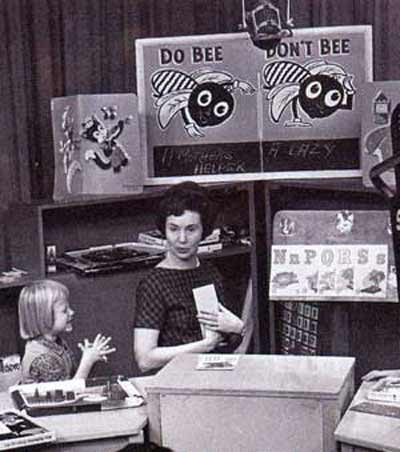
Yes, yes, I know, if I had been a conscientious DoBee [1] I would have gotten my oil changed and tires rotated and what-all, but as an unemployed person I have not seen THE POINT. (See, she pauses to point out, HOW UNEMPLOYMENT NEGATIVELY INFLUENCES THE ECONOMY?!?) At any rate, here I am, send notes and emails and Twitters and Facebook IMs and what-have-you, if you are going down to our illustrious state capital to protest or hang out with the Ron Paul people tomorrow.
My first radio excursion on Saturday morning went well. Gregg roused himself from his cardiologist's floor and aided me wonderfully! I was scared to death, and had the proverbial death-grip on my old wooden antique rosary from Notre Dame (Indiana, not France), which was left to me by a deceased female neighbor named Butch, so its very lucky. In addition, I inexplicably required a huge Double Mocha Frappucino to get it done, but I did it! (Next week, will probably be able to make do with a regular single Vanilla.)
PLEASE DROP IN AND LISTEN! WFISradio.com, 1600 AM or 94.9 FM on your radio dial... or online. 9:00 AM on Saturday mornings, which is an ungodly weekend hour, and I apologize for that.
~*~
Be-bopping around the internet today, whilst watching Doris Day (yall know how much I love Doris) in With Six You Get Eggroll. A bad movie that nonetheless fascinated me as a wide-eyed, gullible youngster... as Single Mom-with-kids marries Single Dad-with-kids, and they wholesomely "blend" their families. As many of you know, I desperately wanted my mother to get married and behave in this wonderfully-domestic fashion, particularly if it meant she would stop wearing the bubble hairdos, popping amphetamines, singing in the country and western bands every night, drinking and smoking like a rat-pack member, marrying people she had just met and dammit, ACT LIKE SHE WAS SUPPOSED TO. [2] Ha.
Of course, now I realize, neither did Doris. If I had only known!
Will somebody tell me: Did wholesome TV-dad Brian Keith die of AIDS or is that just a rumor? Am I mixing him up with Robert Reed, since the plot of this movie is where they obviously came up with THE BRADY BUNCH? (It seemed that after Robert Reed died, it was suddenly open season on the nice TV-dads and magically, they all became gay overnight.)
Okay, checked Wikipedia: No, not true. Suicide. I knew it was something uncommon.
A shame. I always liked him.
The sweet, precocious little child-star, Anissa Jones, whom I liked so much on Brian Keith's old show, Family Affair, was an accidental drug death at age 18. We were only 6 months apart in age. The other child on the show, Johnny Whitaker, has spoken at length about his addiction problems, also, and is now a drug counselor.
I guess these Hollywood-fantasy families really were fake, weren't they?
~*~
[1] To the non-baby boomers, this is from the children's TV show Romper Room and has no relationship to the word DOOBIE as a joint or the Doobie Brothers. There were Do Bees and Don't Bees, and of course, we all tried to be good DO BEES! (We marginally succeeded.)
[2] Mama! Get out your white dress/you've done it before/without much success (Stephen Sondheim to the rescue). When I first heard this song as a kid, at maybe 8 years old, I sobbed my little heart out. (And it's where we get today's blog post title.)
See, I thought, the stipper's children understand!
Posted by
Daisy Deadhead
at
2:26 PM
Labels: 2012 Election, 60s, Anissa Jones, baby boomers, Brian Keith, celebrities, childhood, CNN, Columbia, Doris Day, Hollywood, Johnny Whitaker, musicals, politics, radio, Republicans, Ron Paul, Stephen Sondheim, TV, WFIS
Friday, July 8, 2011
Let's swim to the moon
At left: Ben Hall, at Bohemian Cafe on Saturday.
One of those things about age that makes me profoundly uncomfortable: I get sentimental very quickly.
Like, really sentimental.
It overtakes me suddenly, and there I am, shedding tears over seemingly peculiar, unrelated or odd events. Such as Ben Hall and his guitar playing. Which was just like my late stepfather's. (Note: although the outdated link claims Ben is 18, he has now reached the ripe old age of 22.)
Until I was sitting there listening to Ben, whom I hadn't heard before, I didn't realize I had unconsciously avoided the music of Chet Atkins for a reason... I was suddenly aware that the "thumb-picking" guitar-style of Ben's, was the same as my stepfather's. I have avoided it for many years, flipped radio channels and such, because it made me so emotional. And as Ben described his style of playing, I thought, oh no... because I probably would have avoided his fabulous guitar playing if I had known.
I listened, and promptly got all teary-eyed and emotional. It is so embarrassing, reminding me of a line from Colonel Kurtz in Apocalypse Now: "I cried like some grandmother." Yeah, I guess he means me. I have arrived!
Does any music do that to you?
Here is Ben's playing, the signature thumb-pickin style.
Cannonball Rag - Ben Hall
~*~
This song is as old as I am, seriously... careful, its about death, and way before the Doors made drowning at night sound sexy and existential.
I can hardly believe its taken me this long to post it!
Endless Sleep - Jody Reynolds
~*~
And speaking of the Doors, here is the 60s version of drowning for fun:
Moonlight Drive - The Doors
Let's swim to the moon
Let's climb through the tide
Penetrate the evening that the
City sleeps to hide
Let's swim out tonight, love
It's our turn to try
Parked beside the ocean
On our moonlight drive
Let's swim to the moon
Let's climb through the tide
Surrender to the waiting worlds
That lap against our side
Nothing left open
And no time to decide
We've stepped into a river
On our moonlight drive
~*~
Sorry so morbid, but its been a rather morbid week in America, yes? ;)
Posted by
Daisy Deadhead
at
1:35 PM
Labels: 50s, 60s, aging, Ben Hall, Bohemian Cafe, Chet Atkins, childhood, classic country, classic rock, death, family, Jody Reynolds, music, nostalgia, rockabilly, The Doors